Carbon farming in Europe is gradually moving from the stage of regulations and concepts toward the real implementation of practices on the ground. Following the establishment of the European framework for the certification of carbon removals and carbon farming, the focus is increasingly shifting to how these mechanisms will function in practice and what value they will create for farmers. This transition marks an important shift – from policies to action. Carbon farming is emerging as a tool that connects sustainable
Two large-scale carbon farming projects are being launched in Bulgaria, covering both Northern and Southern regions of the country. The initiative aims to transform agricultural land into a long-term mechanism for carbon capture and storage, while creating new income opportunities for farmers through carbon credits. The projects focus on the implementation of regenerative agricultural practices that not only contribute to reducing carbon dioxide in the atmosphere, but also improve soil health, farm resilience, and overall economic performance. With a 40-year crediting period
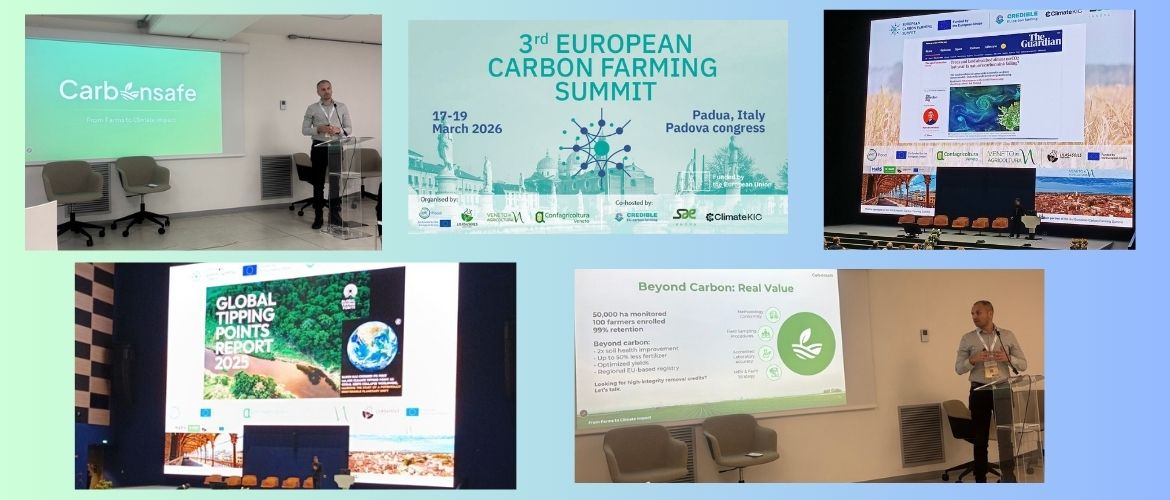
Carbonsafe took part in the 3rd European Carbon Farming Summit, held in Padua, Italy – one of the leading European events dedicated to the development of carbon farming, innovations in monitoring, and the future of carbon markets. The forum brought together representatives from business, academia, and institutions working towards building sustainable and reliable solutions in the field of soil carbon and climate policy. As part of the event, Carbonsafe actively participated in the programme, presenting its model during the Innovation Corner
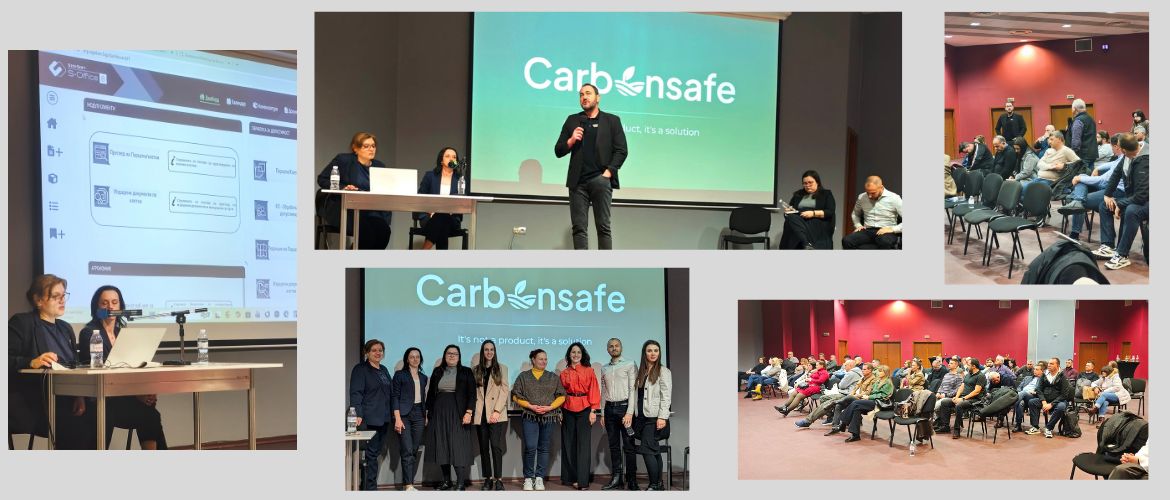
On February 18, 2026, Carbonsafe JSC hosted a specialized seminar in Hall “Bulgaria”, Pavilion 8 at the International Fair Plovdiv. The event brought together farmers – Carbonsafe clients – as well as partners and experts engaged in the development of carbon farming and the voluntary carbon market. During the program, the Carbonsafe team presented its two ongoing initiatives – “Carbon Farming Project – Northern Bulgaria” and “Carbon Farming Project – Southern Bulgaria.” The entire project lifecycle was outlined, from registration and
On February 11, 2026, Chavdar Marinov, Executive Director of Carbonsafe, participated as a guest lecturer at the Institute of Agricultural Economics during one of its regular scientific seminars. The event brought together representatives of the academic community, researchers, and experts engaged in developing sustainable economic models in agriculture. During the lecture, the fundamentals of carbon farming were presented, along with its role in the modern economy from both an environmental and financial perspective. Special emphasis was placed on the scientific approach
With the development of carbon projects in agriculture and the growth of the voluntary carbon market, the term offtake—a pre-purchase or offtake agreement—is being used increasingly often. Although originating in the energy sector, this type of agreement is now gaining wider application in carbon credit markets, as it provides clarity and certainty from the early stages of a project. In simple terms, an offtake agreement is a contract under which a buyer commits in advance to purchase future carbon credits under
At the end of January, Carbonsafe became the focus of an independent on-site audit conducted by Earthood as part of the validation and verification process for its carbon projects. Between January 26 and 30, 2026, Carbonsafe hosted representatives of Earthood—an independent auditor and verifier of climate and carbon projects—as part of the validation and verification cycle for the 2024–2025 project period. During the audit mission, Earthood’s experts carried out a detailed review of Carbonsafe’s operational systems, along with field visits to
Carbon removal projects in agriculture are playing an increasingly important role in the voluntary carbon market. Alongside concepts such as monitoring, verification, and certification, the term “additionality” is being used more frequently. Although it may sound technical, additionality lies at the heart of trust in carbon credits and is among the most strictly assessed requirements by standards and independent auditors. In simple terms, additionality means that a project delivers real climate impact that would not have occurred without the project itself
Between January 26–30, Carbonsafe will host an on-site visit by a third, independent party as part of the ongoing certification cycle of its agricultural carbon sequestration projects. The visit represents a key stage in the validation and verification process of the project results. The audit will be conducted by Earthood, an internationally recognized organization with extensive experience in the validation and verification of climate and carbon projects. The main objective of the audit is to confirm that Carbonsafe’s projects comply with the
Carbonsafe at WB ESG Conference Belgrade 2025: Part of the Regional Dialogue on a Sustainable Future
On December 8, 2025, Belgrade became a leading platform for discussing ESG trends across the region. At the prestigious Metropol Palace Hotel, representatives of banks, corporate organizations, international institutions, and academic bodies gathered to outline the challenges and opportunities shaping sustainable development. Carbonsafe was among the participating companies, taking part in key meetings and professional discussions focused on cooperation and future initiatives. The opening panels focused on the practical implementation of ESG principles in business. Regional leaders spoke candidly about decarbonization,