carbonsafe

About carbonsafe

This author carbonsafe has created 190 entries.

Notice on Updated Project Documentation During Validation Process

Public Notice Date: 12.06.2026 Subject: Update in the Project Design Document (PDD) of the CARBONSAFE CARBON FARMING PROJECT – SOUTH REGION As part of the ongoing validation process, the Project Design Document (PDD) have been updated to reflect revisions, clarifications, and improvements introduced in response to observations and findings raised by the independent Validation and Verification Body (VVB). The documents published below represent the most recent versions available at this stage of the validation process. They are provided for transparency purposes and to inform

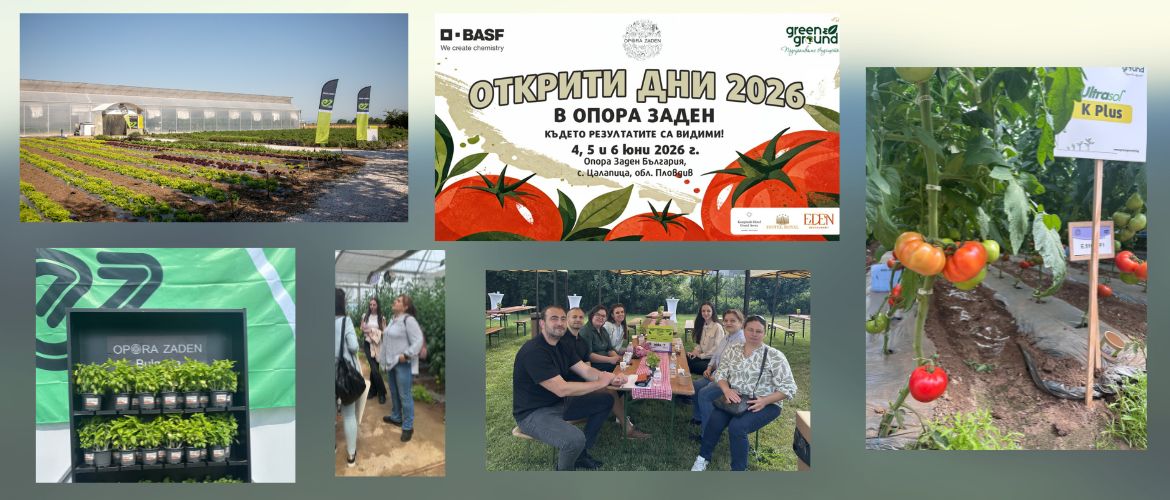
Carbonsafe visited Opora Zaden Bulgaria’s Open Days 2026

The Carbonsafe team attended Open Days 2026 at Opora Zaden Bulgaria’s demonstration site in the village of Tsalapitsa, where new varieties and hybrids of vegetable crops were presented, along with up-to-date solutions for plant nutrition and crop protection. A key focus of the event was tomatoes. Visitors had the opportunity to explore a wide range of large-fruited pink and red varieties and hybrids, including new solutions with high resistance to Tomato Brown Rugose Fruit Virus (ToBRFV), which is among the most

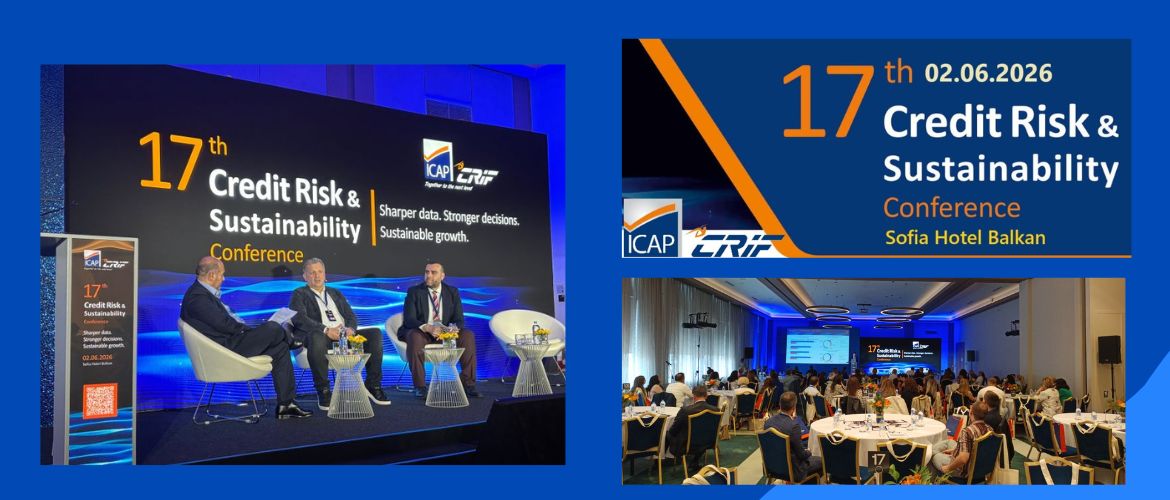
Data, Risk, and Sustainable Growth in Focus at the Credit Risk & Sustainability Conference 2026

On June 2, 2026, representatives of Carbonsafe attended the 17th edition of the Credit Risk & Sustainability Conference, organized by ICAP CRIF in Sofia. The event brought together representatives from the financial sector, businesses, rating agencies, and sustainability experts to discuss current challenges related to risk management, ESG regulations, and corporate sustainability. This year’s conference was held under the theme „Sharper Data. Stronger Decisions. Sustainable Growth.“, highlighting the critical role of high-quality data in decision-making amid economic and geopolitical uncertainty. Key topics

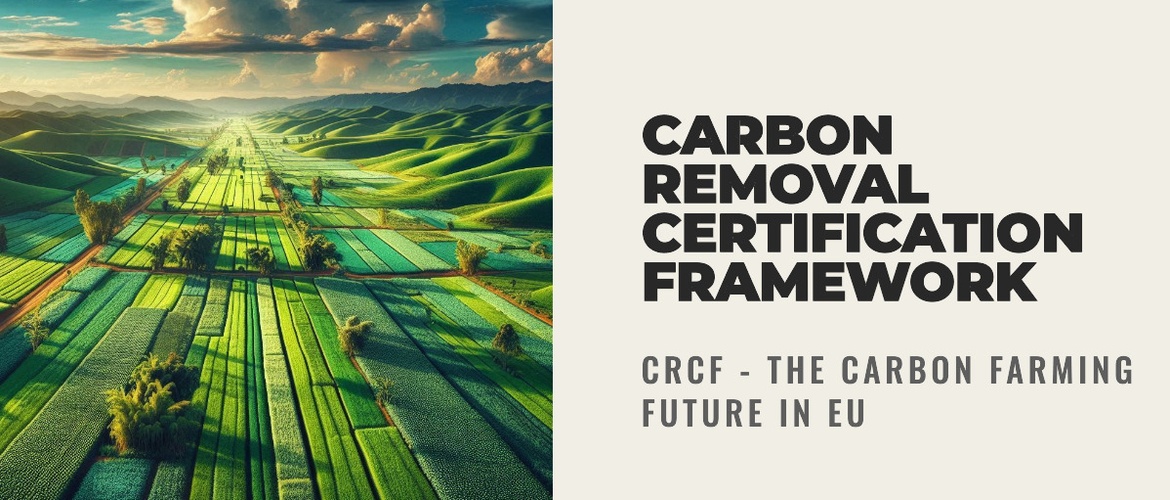
From Regulation to Practice – What Comes Next for CRCF and Carbon Farming

In May and June 2026, Carbonsafe participated in two key events organised by the European Commission’s Directorate-General for Climate Action (DG CLIMA), focusing on the implementation of the Carbon Removals and Carbon Farming Certification Framework (CRCF). The first event, CRCF Days 2026, took place on 20 – 21 May in Brussels and online. The forum brought together more than 500 representatives from public institutions, certification schemes, project developers, investors, farming organisations, and experts from across Europe to discuss the future development

Why the Quality of Carbon Credits Is Becoming More Important Than Their Quantity

The carbon credit market is entering a new stage of development. While a few years ago the main focus was on increasing the number of climate projects, attention is now increasingly shifting toward the quality of the carbon credits generated and the level of trust they inspire. The reason is simple: not all carbon credits carry the same value. Behind every credit stands a specific project, a particular methodology for measuring results, and a different approach to quantifying climate impact. As

The Quality of Carbon Credits and the Role of Ratings in Carbon Farming

With the development of the voluntary carbon market, carbon project ratings are becoming increasingly important. They are gradually establishing themselves as a tool for assessing the quality, reliability, and actual climate impact of projects, while interest in them continues to grow among investors, buyers, and organizations developing carbon programs. In practice, ratings represent an independent expert assessment of the risk and reliability of carbon credits. They do not replace certification and verification but instead provide an additional perspective on the extent

Notice on Updated Project Documentation During Validation Process

Public Notice Date: 20.05.2026 Subject: Update in the Project Design Document (PDD) of the CARBONSAFE CARBON FARMING PROJECT – SOUTH REGION As part of the ongoing validation process, the Project Design Document (PDD) have been updated to reflect revisions, clarifications, and improvements introduced in response to observations and findings raised by the independent Validation and Verification Body (VVB). The documents published below represent the most recent versions available at this stage of the validation process. They are provided for transparency purposes and to inform

Soil as a Strategy – How Farmers Are Seeking Sustainability Amid Rising Costs

In recent years, agriculture has been operating under increasing economic pressure. Rising fuel prices, fertilizers, and essential resources, intensified by geopolitical instability and changes in international markets, are forcing farmers to seek new approaches to farm management. In this environment, sustainability is no longer defined solely by yields, but by the ability to optimize costs without compromising production. It is becoming increasingly clear that one of the most important prerequisites for this is soil condition. For a long time, soil health

Notice on Updated Project Documentation During Validation Process

Public Notice Date: 08.05.2026 Subject: Update in the Project Design Document (PDD) of the CARBONSAFE CARBON FARMING PROJECT – NORTH REGION As part of the ongoing validation process, the Project Design Document (PDD) have been updated to reflect revisions, clarifications, and improvements introduced in response to observations and findings raised by the independent Validation and Verification Body (VVB). The documents published below represent the most recent versions available at this stage of the validation process. They are provided for transparency purposes and to inform

How the Carbon Credit Generation Process Is Ensured – From Soil Sampling to Registry

Carbon farming is increasingly establishing itself as a sustainable model that combines improved soil health with opportunities for additional income for farmers. However, as interest in these practices grows, a key question naturally arises: how reliable is the process of generating carbon credits, and how can we be sure that the results are real and verifiable? The answer lies in a clearly structured and traceable process that begins directly in the field. Soil sampling is the first and one of the